
| IFRAIN ALFONSO VILLA CLARA REGION |
This mill, originally known as Santa Maria, was renamed in memory of Ifrain Alfonso (1926-1958) also
known as ‘Cheche’, who coordinated the propaganda front of 26th July Movement in the Santa Clara
province. Originally imprisoned for trying to encourage workers to strike in protest against the coup
of General Batista in 1952, he continuously worked to further the revolutionary cause. Following
several periods in prison he returned to the revolutionary fold and was responsible for organising
numerous acts of sabotage in support of the cause. In March 1958 he was captured and tortured by
government forces but failed to give any information He was hospitalised, to recover prior to further
torture, but then went missing and his body was never discovered.
This mill was always a personal favourite as it not only featured a flat crossing over the Great Cuban
Freeway and shared running on the FCC but also housed Alco 2-8-2 No.1910, the largest loco at work
on any of the sugar mill systems and one which I drove on two occasions.
known as ‘Cheche’, who coordinated the propaganda front of 26th July Movement in the Santa Clara
province. Originally imprisoned for trying to encourage workers to strike in protest against the coup
of General Batista in 1952, he continuously worked to further the revolutionary cause. Following
several periods in prison he returned to the revolutionary fold and was responsible for organising
numerous acts of sabotage in support of the cause. In March 1958 he was captured and tortured by
government forces but failed to give any information He was hospitalised, to recover prior to further
torture, but then went missing and his body was never discovered.
This mill was always a personal favourite as it not only featured a flat crossing over the Great Cuban
Freeway and shared running on the FCC but also housed Alco 2-8-2 No.1910, the largest loco at work
on any of the sugar mill systems and one which I drove on two occasions.


Baldwin 2-6-2 No.1635 (built 1926) crosses the Great Cuban Freeway with a loaded train of sugar cane in March 1998.
The freeway was a project started by the Russians but never completed. It was intended to run the length of the island
and allow troops to be rapidly moved in the event of invasion. When the Russians withdrew from Cuba almost all of the
overbridges were unfinished and Cubans continued to cross the six lane highway on flat crossings. Trains had right of
way and car and lorry drivers were expected to pause before crossing the line. On one occasion, as I drove No.1910
back to the mill, I reached for the brake as I approached the motorway - to the amusement of the crew who simply
pulled the whistle chain and heaved the regulator back up into the cab roof. The effect of T-boning a loaded petrol
tanker doesn't bear thinking about!
The freeway was a project started by the Russians but never completed. It was intended to run the length of the island
and allow troops to be rapidly moved in the event of invasion. When the Russians withdrew from Cuba almost all of the
overbridges were unfinished and Cubans continued to cross the six lane highway on flat crossings. Trains had right of
way and car and lorry drivers were expected to pause before crossing the line. On one occasion, as I drove No.1910
back to the mill, I reached for the brake as I approached the motorway - to the amusement of the crew who simply
pulled the whistle chain and heaved the regulator back up into the cab roof. The effect of T-boning a loaded petrol
tanker doesn't bear thinking about!

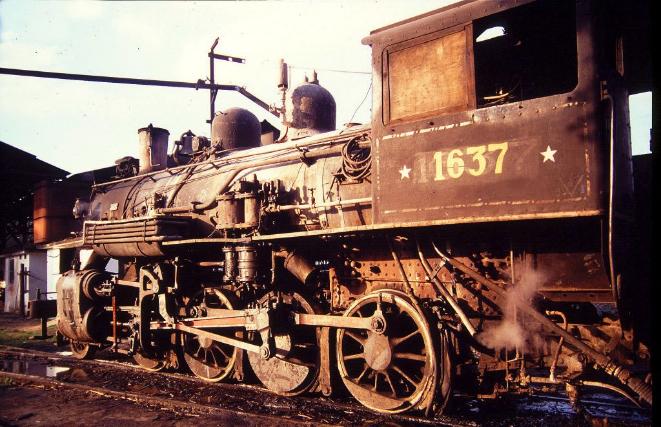
ALCO 2-8-0 No.1637 catched the
late afternoon sun as it stands
outside the shed at Ifrain Alfonso.
Drews were extremely friendly and
a driving turn on the footplate was
there for the asking (and a few
pens, scented soaps and some old
photographs) - March 1996
late afternoon sun as it stands
outside the shed at Ifrain Alfonso.
Drews were extremely friendly and
a driving turn on the footplate was
there for the asking (and a few
pens, scented soaps and some old
photographs) - March 1996
A rear three quarter view of the
same locomotive with the shed in
the background
same locomotive with the shed in
the background
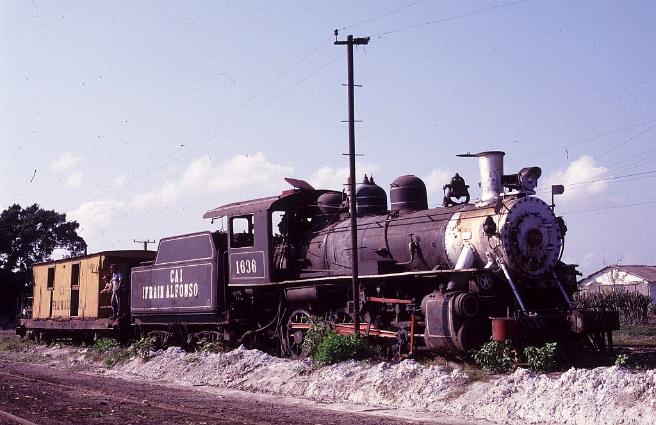
Ifrain Alfonso had five large locos for
line work with four different wheel
arrangements. No.1636 was a 4-6-0
ALCO built in 1925 and was a
regualr engine on line work although
not as powerful as No.1850 or
No.1910
line work with four different wheel
arrangements. No.1636 was a 4-6-0
ALCO built in 1925 and was a
regualr engine on line work although
not as powerful as No.1850 or
No.1910

Like a number of other Cuban sugar
mills, part of the journey from the
loading points to the mill involved
running along a section of the FCC
main line.
Most trains ran from Pozo and
crossed the Great Cuban Freeway
before climbing a steep grade to the
junction with the FCC. Trains could
often be held here for some time
awaiting clearance before making
the short trip to the junction which
finally led to the mill itself just before
Santa Maria station (the previous
name for the mill).
Bad weather at the start of the 1997
zafra led to a shortage of cane from
Pozo and cane was being brought to
Ifrain Alfonso from Diez De Octubre
and Esperanza mills involving
locomotives making extended
journeys along the FCC main line
and through Ranchuelo station to
the amusement and interest of the
locals.
mills, part of the journey from the
loading points to the mill involved
running along a section of the FCC
main line.
Most trains ran from Pozo and
crossed the Great Cuban Freeway
before climbing a steep grade to the
junction with the FCC. Trains could
often be held here for some time
awaiting clearance before making
the short trip to the junction which
finally led to the mill itself just before
Santa Maria station (the previous
name for the mill).
Bad weather at the start of the 1997
zafra led to a shortage of cane from
Pozo and cane was being brought to
Ifrain Alfonso from Diez De Octubre
and Esperanza mills involving
locomotives making extended
journeys along the FCC main line
and through Ranchuelo station to
the amusement and interest of the
locals.

Baldwin 2-8-2 No.1850 crosses the
Great Cuban Freeway with a heavily
loaded train in March 1996. The
crossing was protected by a man
with a red flag who occasionally
ventured into the road to flag down
traffic if he could be bothered.
Great Cuban Freeway with a heavily
loaded train in March 1996. The
crossing was protected by a man
with a red flag who occasionally
ventured into the road to flag down
traffic if he could be bothered.
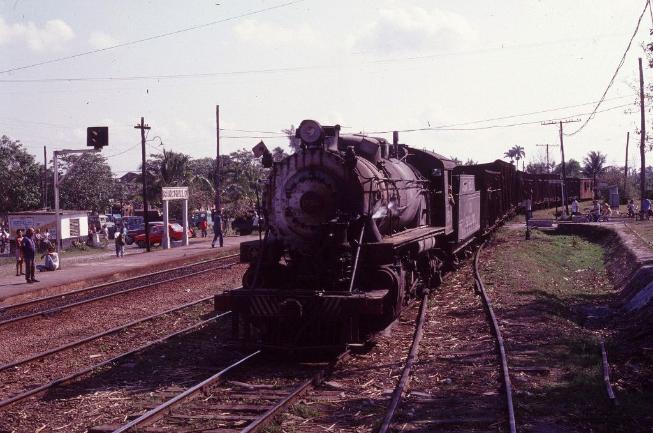
Baldwin 2-8-2 No.1850 (built 1935)
brings a loaded train through the
station at Ranchuelo in March 1997
brings a loaded train through the
station at Ranchuelo in March 1997
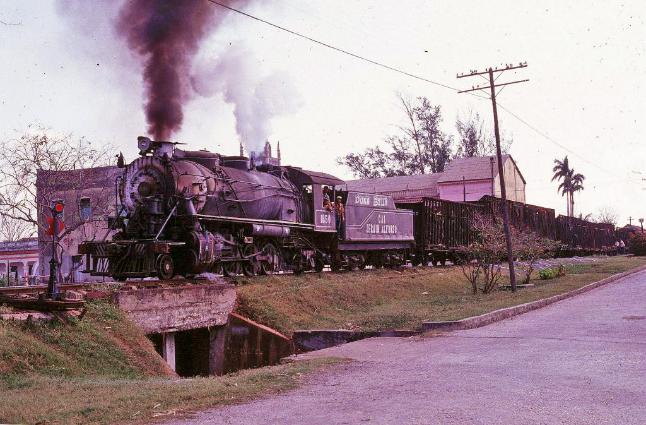
With the unpredicable weather
closing in again, No.1850 makes its
departure from Ranchuelo and
heads along the FCC towards the
mill at Ifrain Alfonso.
closing in again, No.1850 makes its
departure from Ranchuelo and
heads along the FCC towards the
mill at Ifrain Alfonso.
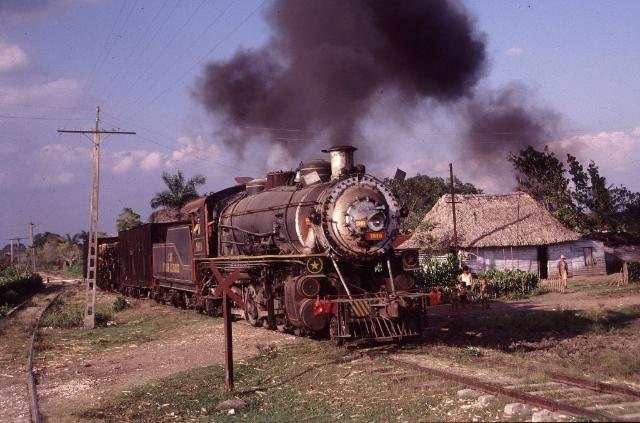
In complete contrast the weather
during my 1998 visit could not have
been better and this coincided with a
return to steam of ALCO 2-8-2
No.1910, built in 1925. As mentioned
in the site introduction this was a
former mainline locomotive that was
transferred to MINAZ and was the
largest locomotive at work on the
island during the 1990's.
during my 1998 visit could not have
been better and this coincided with a
return to steam of ALCO 2-8-2
No.1910, built in 1925. As mentioned
in the site introduction this was a
former mainline locomotive that was
transferred to MINAZ and was the
largest locomotive at work on the
island during the 1990's.
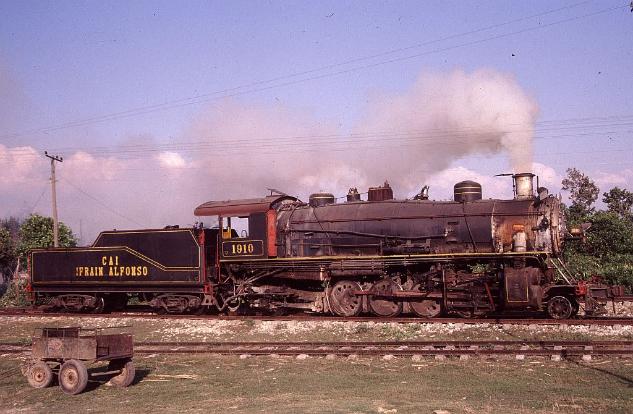
This side-on view of No.1910 really
does show off its attractive lines and it
seemed almost sad that it should finish
its life in an industrial setting rather
than speeding passengers along the
main line.
does show off its attractive lines and it
seemed almost sad that it should finish
its life in an industrial setting rather
than speeding passengers along the
main line.
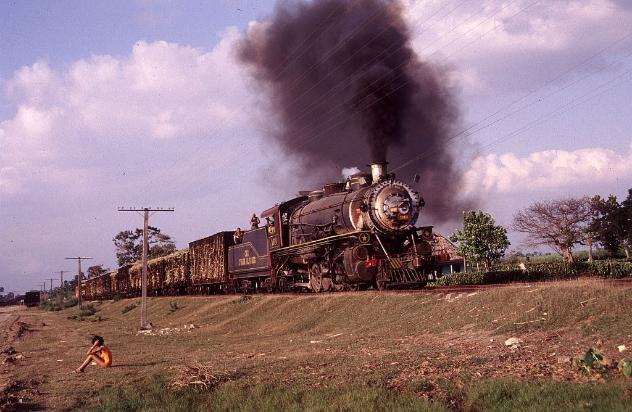
No.1910 leaving the Pozo loading
point with a long train of loaded
wagons - a site so familiar that it
doesn't even turn the head of one of
the local villagers
point with a long train of loaded
wagons - a site so familiar that it
doesn't even turn the head of one of
the local villagers
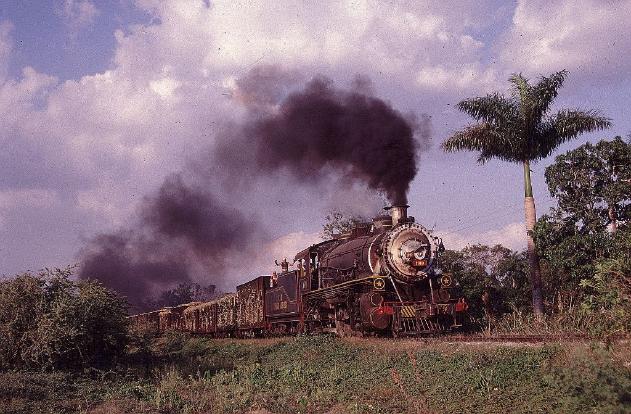
ALCO 2-8-0 No.1910 passing
through Horqueto - between Pozo
and the Great Cuban Freeway - with
a loaded train heading for the mill
through Horqueto - between Pozo
and the Great Cuban Freeway - with
a loaded train heading for the mill
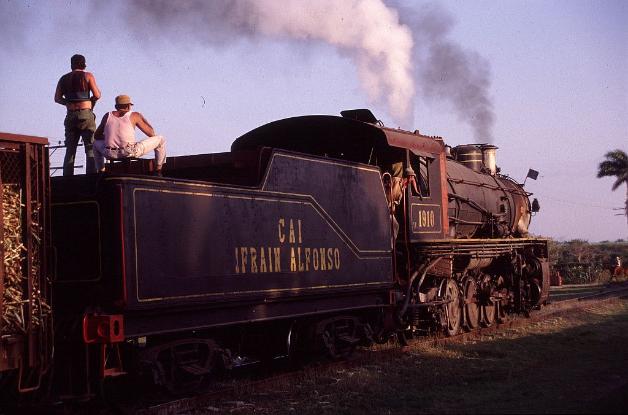
There was probably no better way to
ride the train than perched on the
tender - away from the heat of the
firebox and enjoying a cooling breeze
although the state of the track could
make standing up a rather perilous
option!
ride the train than perched on the
tender - away from the heat of the
firebox and enjoying a cooling breeze
although the state of the track could
make standing up a rather perilous
option!
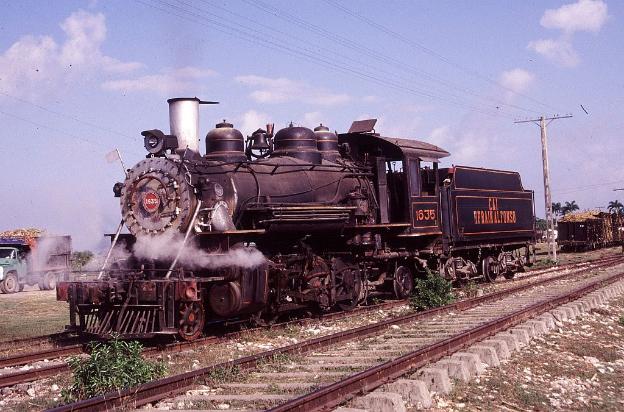
The 1998 season saw line work shared
between No.1910 and the somewhat
smaller Baldwin 2-6-2 No.1635 which
was also built in 1925. It is seen here
standing light engine at the Pozo
loading point.
between No.1910 and the somewhat
smaller Baldwin 2-6-2 No.1635 which
was also built in 1925. It is seen here
standing light engine at the Pozo
loading point.
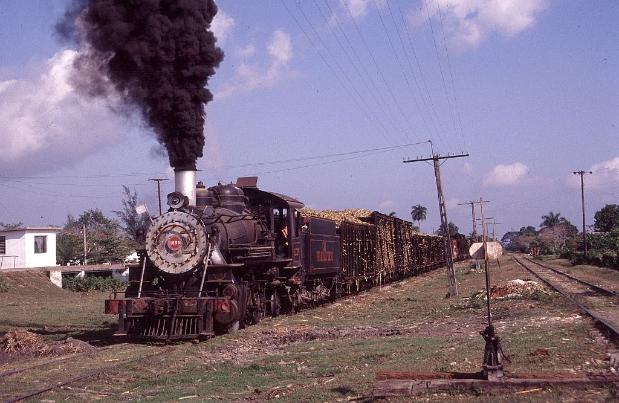
With the oil burner turned full on,
No.1635 stuggles to get its loaded train
underway from Pozo
No.1635 stuggles to get its loaded train
underway from Pozo
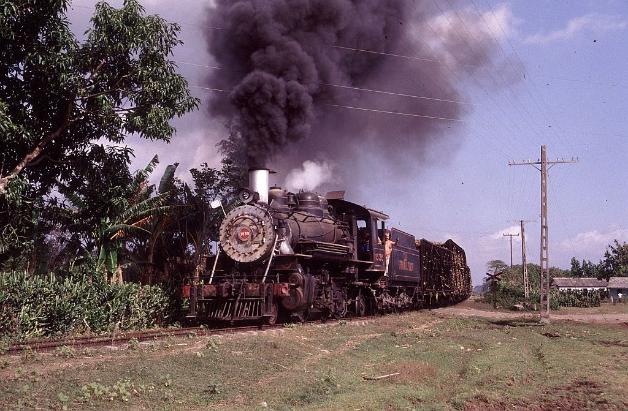
The fireman hangs out of the cab to
escape the heat as No.1635 pound
through Horqueta
escape the heat as No.1635 pound
through Horqueta
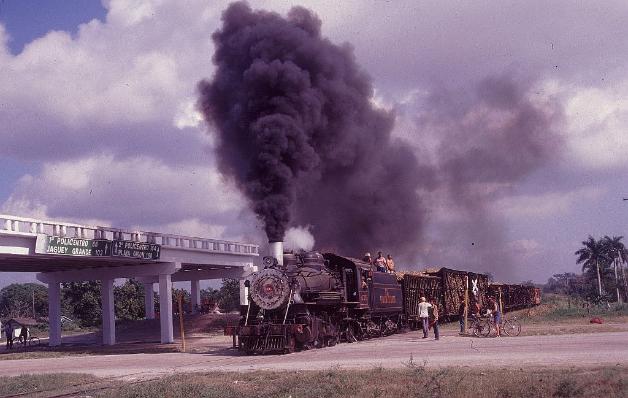
Once again disaster is avoided as
No.1635 storms across the Great
Cuban Freeway. The road was
particularly treacherous to drive along
at night as it was frequently used by
unlit bullock carts using the wrong
carriageway, broken down lorries in
the middle lane and the inevitable
cyclist without lights. Approaching
Santa Clara at high speed one night I
was aware of a flickering light in the
middle of the road and discovered to
my horror, and that of my passengers,
that this was a burning brazier
marking the end of road - the Russians
had failed to complete the
carriageway and all traffic was turned
off the highway and across a field to
the nearby minor road leading into
town.
No.1635 storms across the Great
Cuban Freeway. The road was
particularly treacherous to drive along
at night as it was frequently used by
unlit bullock carts using the wrong
carriageway, broken down lorries in
the middle lane and the inevitable
cyclist without lights. Approaching
Santa Clara at high speed one night I
was aware of a flickering light in the
middle of the road and discovered to
my horror, and that of my passengers,
that this was a burning brazier
marking the end of road - the Russians
had failed to complete the
carriageway and all traffic was turned
off the highway and across a field to
the nearby minor road leading into
town.
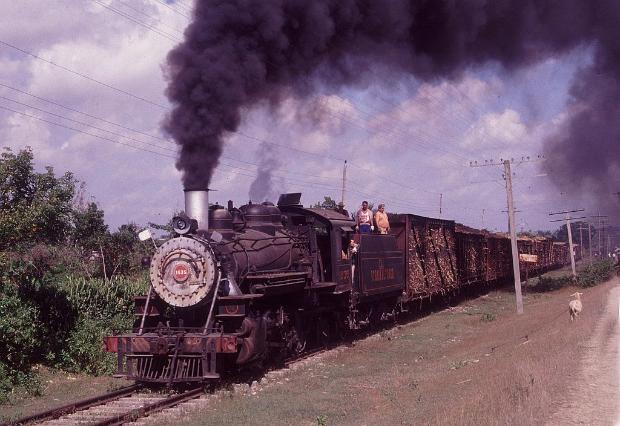
No.1635 storms up the climb from the
Great Cuban Freeway and towards the
junction with the FCC (see map above)
Great Cuban Freeway and towards the
junction with the FCC (see map above)
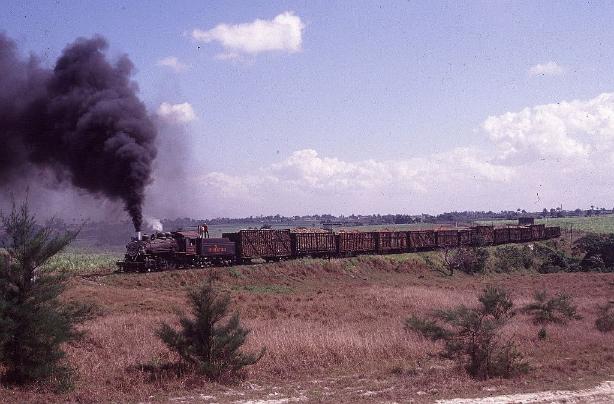
No.1635 approached the junction with
the FCC. The shot is actually taken
from the trackbed of the main line - if
the cane train is cleared to use junction
then there is little chance of a train on
the main line - although in Cuba nothing
was ever that certain!
the FCC. The shot is actually taken
from the trackbed of the main line - if
the cane train is cleared to use junction
then there is little chance of a train on
the main line - although in Cuba nothing
was ever that certain!
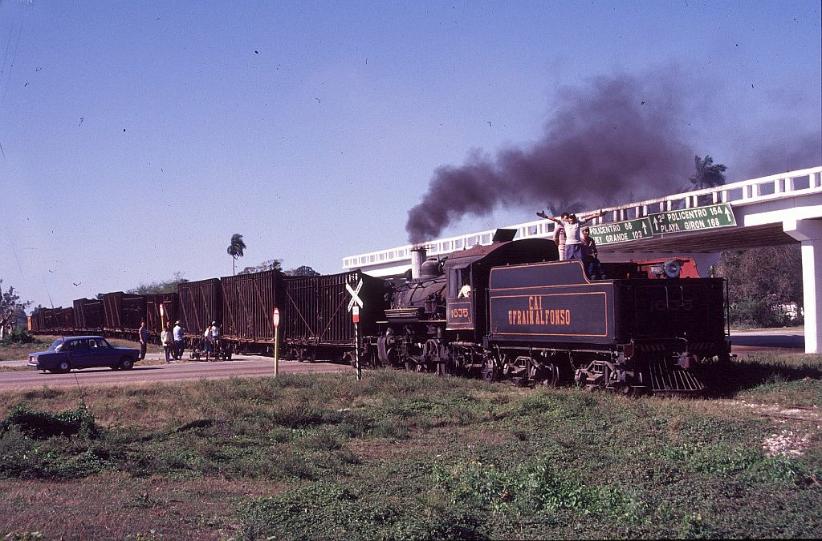
The start of another day and No.1635 is crossing the Great Cuban Freeway with a long train of empty cane wagons
bound for the Pozo loading point. The car at the crossing was one of four which we were using in 1998 although I am
never sure why any rental company would ever entrust their vehicles to a group of enthusiasts. They were surely
never intended for driving at breakneck speed down unmade roads in pursuit on the next master shot! The stories
about the state of rental cars on their return to Havana would probably make an interesting web site all of its own.
Frequently gratuities exchanged hands to ensure that the cars were not fully inspected until our plane was out of
Cuban airspace!
bound for the Pozo loading point. The car at the crossing was one of four which we were using in 1998 although I am
never sure why any rental company would ever entrust their vehicles to a group of enthusiasts. They were surely
never intended for driving at breakneck speed down unmade roads in pursuit on the next master shot! The stories
about the state of rental cars on their return to Havana would probably make an interesting web site all of its own.
Frequently gratuities exchanged hands to ensure that the cars were not fully inspected until our plane was out of
Cuban airspace!

Like almost all of the Cuban sugar mills,
Ifrain Alfonso is no more and the
locomotives that worked the system
have either been scrapped or moved to
one of the several museums which now
dot the island. Scenes such as this are
now just a fading memory for those
lucky enough to have witnessed the
'real' Cuba during the 1990's
Ifrain Alfonso is no more and the
locomotives that worked the system
have either been scrapped or moved to
one of the several museums which now
dot the island. Scenes such as this are
now just a fading memory for those
lucky enough to have witnessed the
'real' Cuba during the 1990's
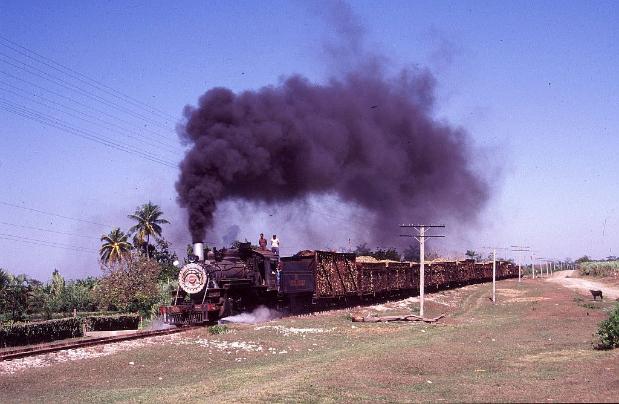
A final glimpse of No.1635 as she heads
along the section towards the FCC
junction with a heavily loaded train
along the section towards the FCC
junction with a heavily loaded train